TRUSTPILOT sold the trust of consumers and its shareholders to the highest bidder
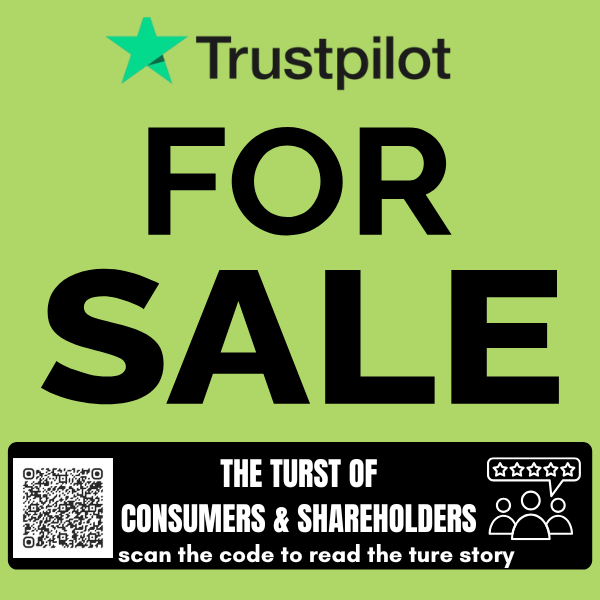
Dear Fellow Shareholders,
I write to you not only as an investor in Trustpilot Group plc, but as someone who has spent the past year uncovering a deeply troubling pattern of misconduct, regulatory evasion, and governance failure within the company. What I have discovered threatens the integrity of Trustpilot’s platform, its reputation, and ultimately, shareholder value.
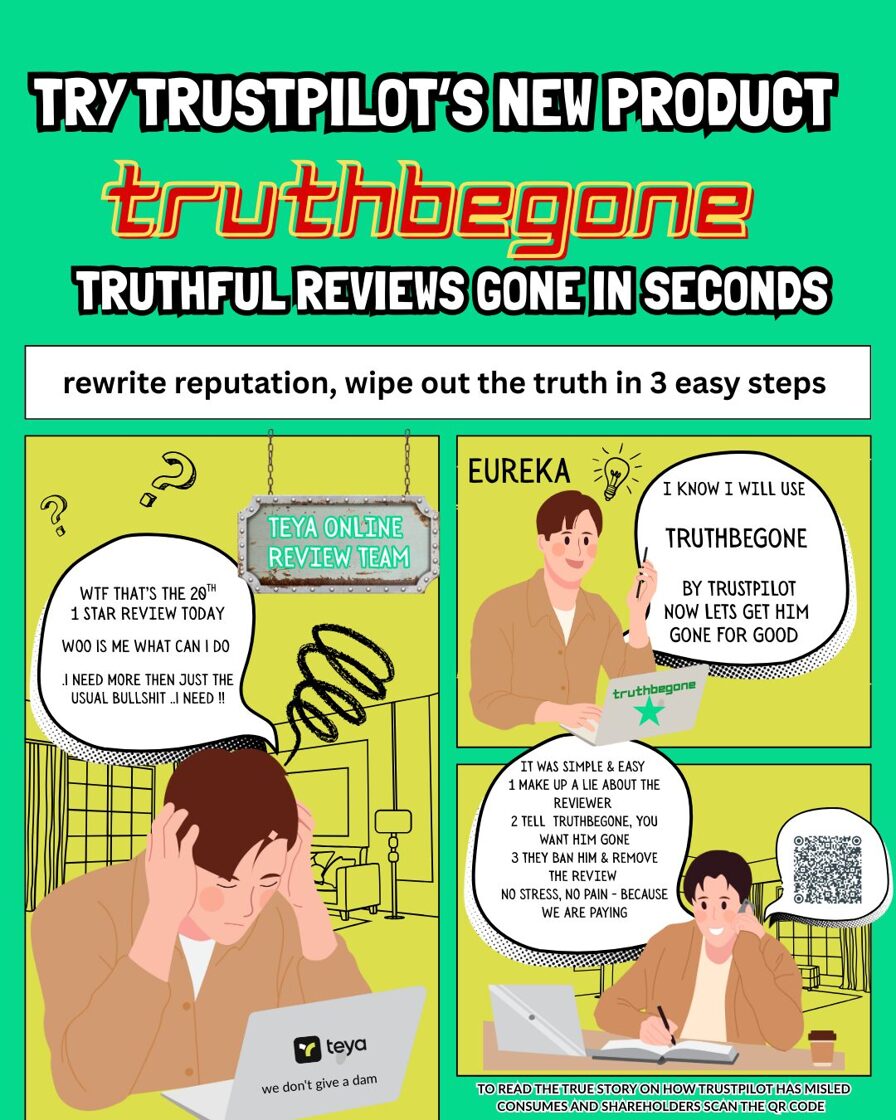
Through a Data Subject Access Request (DSAR) submitted to Teya—a paying client of Trustpilot—I obtained unredacted internal communications between Teya and Trustpilot. These documents reveal a coordinated strategy to suppress negative reviews and ban critical users, including myself. This directly contradicts Trustpilot’s public claims of impartiality and transparency.
The evidence includes:
Emails from Trustpilot’s Content Integrity Team discussing how to remove my reviews and ban me from the platform at Teya’s request
Proof that Teya misled the Financial Ombudsman Service (FOS) by claiming they “do not have the ability to remove reviews,” while actively coordinating with Trustpilot to do just that
Inconsistent moderation decisions, where reviews were upheld and then reversed after re-flagging by paying clients
Processing of my personal data for purposes that are neither lawful nor transparent under GDPR
These findings have been submitted to:
The Financial Conduct Authority (FCA), Enforcement and Market Oversight Team
The Information Commissioner’s Office (ICO)
The Danish Financial Supervisory Authority (Finanstilsynet)
The Financial Ombudsman Service, which has now escalated the matter to the Ombudsman for review
Trustpilot’s refusal to provide a complete DSAR, its failure to engage transparently, and its complicity in review manipulation are not isolated lapses—they are systemic failures that breach multiple regulatory frameworks, including:
Section 172 of the Companies Act 2006 (Duty to promote the success of the company)
DTR 2.2 (Disclosure of inside information)
UK Corporate Governance Code (Provision 3 and Principle E)
Trustpilot’s “trust” proposition is its core product. If that trust is compromised, so is the platform’s credibility, operational integrity, and market valuation. These failures are especially alarming given the company’s ongoing share buyback program, which may be occurring under conditions of material non-disclosure.
As shareholders, we must ask:
Why has the Board failed to investigate or disclose these risks?
Why were internal channels exhausted without resolution?
What controls exist to prevent abuse of moderation systems by paying clients?
I urge fellow shareholders to demand:
An independent investigation into Trustpilot’s moderation practices and data governance
Full disclosure of all communications between Trustpilot and paying clients regarding review flagging and user bans
A Board-level response addressing the governance failures and regulatory risks now facing the company
Trustpilot was built on the promise of transparency and consumer empowerment. That promise is now in question. As shareholders, we have a duty to protect the integrity of the business and the value of our investment.
I am prepared to take all necessary steps—including legal action and public disclosure—to ensure accountability. I invite you to join me in demanding the transparency and governance this company owes us.
Yours sincerely,
Greg Wixted
Shareholder, Trustpilot Group plc
🔍
THE QUESTIONS TRUSTPILOT MUST ANSWER
What steps will Trustpilot take to initiate a truly independent, external investigation into thesystemic issues of review moderation and potential manipulation?
How does Trustpilot ensure that its internal legal team, which reviews shareholder concerns, is sufficiently independent from the Content Integrity Team?
Can you explain why comprehensive whistleblowing evidence, which detailed systemic issues and alleged fraud, was dismissed and filed as "not relevant"?
Does Trustpilot maintain that the internal review of the whistleblowing complaint was truly independent and thorough, despite the evidence being disregarded?
What is Trustpilot’s process for ensuring that whistleblowing complaints are investigated by individuals or teams *without* prior involvement in the disputed matters?
* What is Trustpilot’s response to the perception that its business model, which charges for advanced features including flagging, indirectly incentivises or enables the manipulation of review outcomes?
Now its proven that Trustpilot was aware of systemic incentivization or manipulation of reviews by a paying client and failed to take adequate action, what would be the consequences for Trustpilot?
How do you assess the reputational damage to the company if it becomes public that legitimate negative reviews are systematically removed due to procedural technicalities rather than genuine guideline breaches?
How does the Board evaluate the material risk that public disclosure of these systemic issues could severely devalue the share price, especially during a share buyback program?
Does Trustpilot believe that the consistent pattern of aggressive, often invalid, flagging by multiple paying clients represents a material risk to the integrity of its platform that warrants disclosure to the market?
Does Trustpilot’s senior leadership, including the Chief Trust Officer, have full visibility into the detailed outcomes of flagged reviews, including specific removal reasons and invalid flagging rates per business?
What measures will Trustpilot implement to prevent the exploitation of its review dispute process by businesses leveraging the 3-day rule and exhaustive documentation requirements?
If Trustpilot’s processes are found to be inadvertently facilitating review manipulation, what concrete steps will be taken to overhaul these processes and restore genuine trust in the platform?
What is Trustpilot’s response to the perception that its business model, which charges for advanced features including flagging, indirectly incentivises or enables the manipulation of review outcomes?
How long have been aware of systemic incentivization or manipulation of reviews by a paying client and failed to take adequate action, what would be the consequences for Trustpilot?
How do you assess the reputational damage to the company no that its irfuable evidence show that public that legitimate negative reviews are systematically removed due to procedural technicalities rather than genuine guideline breaches?
How does the Board evaluate the material risk that public disclosure of these systemic issues could severely devalue the share price, especially during a share buyback program?
Does Trustpilot believe that the consistent pattern of aggressive, often invalid, flagging by multiple paying clients represents a material risk to the integrity of its platform that warrants disclosure to the market?
Will those board members involved in the suppression of the DSAR and will all members of staff involved no be subject to disciplinary action or were they just working under the board instruction ?
How does Trustpilot’s Board (specifically the Audit Committee) oversee the integrity of the review platform, given the potential impact on Trustpilot’s core “trust” proposition and shareholder value? *
What steps will Trustpilot take to initiate a truly independent, external investigation into the systemic issues of review moderation and potential manipulation?
How does Trustpilot ensure that its internal legal team, which reviews shareholder concerns, is sufficiently independent from the Content Integrity Team?
Can you explain why comprehensive whistleblowing evidence, which detailed systemic issues and alleged fraud, was dismissed and filed as "not relevant"?
Does Trustpilot maintain that the internal review of the whistleblowing complaint was truly independent and thorough, despite the evidence being disregarded?
What did you conspire to cover up the unlawful processing of Greg WIXted’s data who else was involved in the decision to ban his, and how in the legal team knew ?
What is Trustpilot’s process for ensuring that whistleblowing complaints are investigated by individuals or teams *without* prior involvement in the disputed matters?
Who in Trustpilot named greg wixted as the whistle-blower ?
Will no review all Teya reviews and remove the fake ones, will you reinstate the reviews they instructed you to remove, will you be banning teya from Trustpilot?
What Have We Got When We Don’t Have Trust ? A Shareholder’s Reflection on Trust, Reputation, and the Cost of Concealment
What Have We Got When We Don’t Have? A Shareholder’s Reflection on Trust, Reputation, and the Cost of Concealment
What have we got when we don’t have transparency? When we don’t have accountability? When we don’t have answers to questions that matter—not just to shareholders, but to the integrity of a platform built on trust?
As a shareholder in Trustpilot Group plc, I’ve spent months trying to understand how a company that claims to democratize reputation can simultaneously enable its paying clients to suppress it. What I found was a system that rewards silence, punishes scrutiny, and manufactures trust on demand.
The Business of Reputation Laundering
Let’s be honest: some companies don’t want feedback—they want control. They don’t want to listen to their customers—they want to silence them. And they’re willing to pay for it.
Trustpilot’s paying clients have access to advanced moderation tools, including the ability to flag reviews. But when those tools are used almost exclusively to target 1-star reviews—like in the case of Teya, Dojo, Mollie, Worldpay, and Revolut—it’s not moderation. It’s manipulation.
Teya, for example, flagged 100% of its 1-star reviews, with an invalid flagging rate of 35%. That’s not quality control. That’s reputation laundering. And Trustpilot helped them do it—through a private Slack channel, where responses were co-authored, reviews were dissected, and narratives were shaped.
The Cost of Silence
Teya didn’t just suppress reviews. It withheld customer funds, closed accounts without warning, and then used Trustpilot to publish templated responses that made the reviewer look like the problem. Here’s one example:
“We can confirm that the closure of your account was carried out in accordance with our internal risk framework and the regulatory obligations we adhere to. These decisions are never taken lightly and are made to protect the integrity and security of our services.”
Sounds official. Sounds reasonable. Until you learn that the exact wording was discussed on Slack, with Trustpilot’s input. Until you realize that the reviewer never breached any guidelines, but was timed out by Trustpilot’s own internal delays. Until you see that 11% of Teya’s reviews were 1-star, and most of them were removed—not because they were fake, but because they were inconvenient.
In my case, it was worse. They discussed my account on Slack. They used my own words to craft a response that made me look like the problem. And when I submitted a lawful DSAR to Trustpilot, I received redacted fragments—while Teya’s DSAR revealed unredacted coordination behind the scenes.
So I ask: what’s behind the redactions? What’s being concealed? And why?
A Platform Built on Trust—Or the Illusion of It?
Trustpilot trades on trust. But when its moderation system is used to protect paying clients at the expense of genuine reviewers, that trust becomes transactional. And when shareholders raise concerns—only to be met with silence—it’s not just a governance failure. It’s a betrayal of the very values the platform claims to uphold.
This isn’t about damages. It’s about dignity. It’s about the right to know, the right to challenge, and the right to expect better from a company that claims to democratize reputation.
If we don’t have that—what have we got?
Due to the sensitive nature of the evidence bundle, access is restricted. Journalists, regulators, and stakeholders may request access by emailing truth@astesgoododesgood,com A password will be provided upon verification.”
full_teya_file_and_gw_dsar_-compressed.pdf
#Trustpilot #Governance #ShareholderRights #Transparency #ReputationManagement #Whistleblowing #EthicalBusiness #Teya #ConsumerProtection #DataRights #GDPR #PlatformAccountability